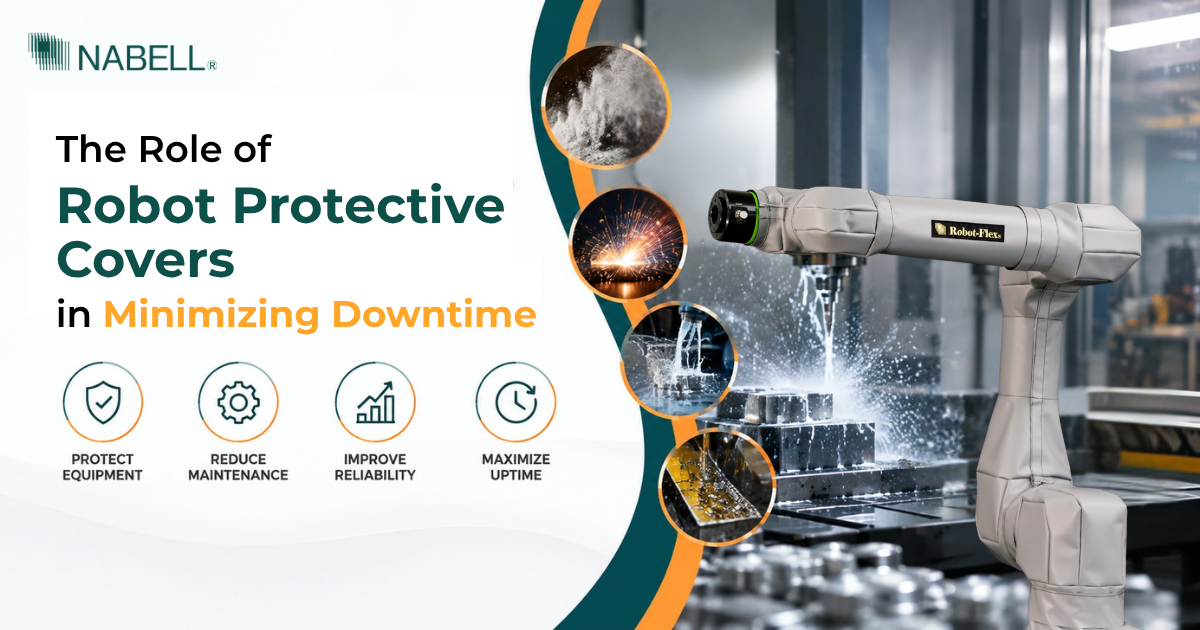
Industrial robots play a critical role in modern manufacturing, supporting applications such as welding, machining, material handling, assembly, and automotive production. While these systems are designed for continuous operation, exposure to dust, debris, heat, welding sparks, coolant, oil, chemicals, and moisture can significantly impact their performance and reliability. Even minor contamination can lead to increased maintenance requirements, unexpected downtime, and costly production disruptions.
This makes robot protection solutions an important consideration for manufacturers seeking to maximize equipment uptime and operational efficiency. Robot protective covers provide an effective barrier against environmental hazards, helping reduce wear, prevent damage, and extend robot service life. This post discusses how robot protective covers reduce downtime and contribute to reliable industrial automation.
Common Causes of Industrial Robot Downtime
Industrial robots are built for demanding applications, but their performance can be affected by the environment in which they operate. Some of the most common causes of robot downtime include:
- Dust and Debris: Manufacturing environments often contain airborne particles, metal fragments, and abrasive materials that can accumulate around robot joints, cables, and sensors. Over time, these contaminants can interfere with movement accuracy and contribute to component wear.
- Welding Sparks and Heat: Robots used in welding applications are exposed to high temperatures, sparks, and molten metal particles. Without proper protection, these elements can damage external surfaces, cables, and sensitive components, reducing robot reliability.
- Coolant, Oil, and Chemical Exposure: CNC machining and industrial processing environments frequently involve exposure to coolant, lubricants, oils, and chemicals. These substances can penetrate vulnerable areas of the robot and accelerate deterioration of electrical and mechanical components.
- Paint Overspray and Contamination: Painting applications require protection against overspray, coatings, and chemical residues. Accumulated contaminants can affect robot movement and increase cleaning requirements if proper protective measures are not implemented.
- Moisture and Humidity: High humidity and washdown environments can introduce moisture-related risks, including corrosion and damage to electrical components. Proper protection helps prevent these issues and maintains reliable robot operation.
How Robot Protective Covers Prevent Damage and Reduce Downtime
Robot protective covers help safeguard critical components and support reliable operation in demanding industrial environments. Engineered industrial robot covers are designed to withstand demanding operating conditions while protecting critical components from contaminants and environmental exposure.
- Protect Critical Components: Covers shield joints, cables, sensors, and external surfaces from dust, debris, and other contaminants that can affect robot performance and accelerate wear. This helps maintain smooth operation and reduce the risk of component damage.
- Prevent Exposure to Harsh Conditions: In welding, machining, painting, and chemical processing applications, protective covers help guard robots against heat, sparks, moisture, coolants, oils, and chemicals. This reduces environmental damage and helps prevent costly repairs.
- Reduce Contamination Build-Up: Protective covers limit the accumulation of dust, paint overspray, and industrial residues on robot surfaces and moving parts. This helps maintain cleaner operating conditions and reduces cleaning requirements.
- Minimize Unplanned Maintenance: By protecting sensitive components from environmental hazards, protective covers help lower the risk of unexpected failures. As part of effective robot maintenance solutions, they reduce emergency repairs and support more predictable maintenance schedules.
- Improve Equipment Reliability: Reduced exposure to contaminants and harsh operating conditions helps preserve the integrity of critical components. As a result, robots can maintain consistent performance, accuracy, and repeatability.
- Extend Service Life: Protective covers help reduce wear caused by abrasion, contamination, and environmental exposure. This contributes to longer equipment life and lower replacement costs.
- Support Continuous Production: Fewer maintenance-related interruptions and equipment failures help manufacturers maintain productivity and keep production schedules on track, particularly in high-volume production environments.
Key Industries Using Robot Protective Covers
Robot protective covers find uses across industries, including:
- Welding: Welding robots are regularly exposed to sparks, spatter, heat, and molten metal particles. Heat-resistant covers help protect critical components from thermal damage and reduce wear caused by welding-related hazards.
- CNC Machining: Robots operating in CNC machining environments encounter coolant, oil, metal chips, and abrasive debris. Protective covers help prevent contamination from reaching joints, cables, and sensors, supporting reliable operation and easier maintenance.
- Automotive Manufacturing: Automotive facilities use robots for welding, painting, assembly, and material handling. Protective covers help shield robots from overspray, chemicals, heat, and debris, ensuring consistent performance in high-volume production environments.
- Material Handling and Logistics: Robots used for palletizing, sorting, and material movement are often exposed to dust, impacts, and continuous operating cycles. Protective covers help minimize wear and improve equipment durability.
- Food and Beverage Processing: Robots in food production and packaging environments are frequently exposed to moisture, washdowns, and cleaning chemicals. Protective covers help safeguard critical components while supporting hygiene and equipment reliability.
- Industrial Automation: From assembly lines to packaging operations, protective covers help reduce environmental exposure, support equipment reliability, and minimize downtime across a wide range of automated manufacturing applications.
Key Features to Consider When Selecting Robot Protective Covers
Selecting the right robot cover for industrial automation requires evaluating application conditions, robot compatibility, and specific protection requirements.
- Application Requirements: The type of application plays a critical role in determining the level of protection required. Welding applications may require resistance to heat, sparks, and spatter, while machining environments demand protection against coolant, oil, and metal debris. Understanding the operating conditions helps ensure the cover provides adequate protection without restricting robot movement.
- Custom-Fit Design: A protective cover should be designed to match the robot model and its range of motion. A precise fit helps prevent interference with joints, cables, sensors, and moving components while ensuring consistent protection throughout the robot’s operating cycle.
- Resistance to Environmental Hazards: The cover material should be selected based on the environmental risks present in the application. Exposure to heat, moisture, chemicals, coolants, oils, dust, or abrasive particles requires materials specifically engineered to withstand these conditions over extended periods.
- Material Durability: Protective covers are continuously exposed to mechanical stress and environmental wear. Durable materials with strong abrasion, tear, and puncture resistance help maintain long-term protection and reduce the frequency of cover replacement.
- Flexibility and Range of Motion: Effective protection should not compromise robot performance. The cover should allow unrestricted movement, enabling the robot to maintain its speed, precision, and repeatability during operation.
- Ease of Installation and Maintenance: Covers designed for quick installation and removal simplify routine inspections and maintenance activities. This helps reduce service time and minimizes disruptions to production schedules.
The effectiveness of a protective cover ultimately depends on its design, material selection, and application compatibility. Nabell’s Robot-Flex® covers are designed to meet these requirements while helping manufacturers improve equipment reliability and reduce downtime.
Why Choose Nabell’s Robot-Flex® Covers
Nabell’s Robot-Flex® covers are engineered as reliable robot protection solutions for industrial robots operating in demanding environments while supporting equipment reliability and uptime.
- Custom-Engineered Protection: Covers are designed to match specific robot models and applications, ensuring precise fit and consistent protection without restricting movement.
- Application-Specific Materials: A range of material options is available to address environmental challenges such as heat, sparks, dust, coolants, oils, chemicals, moisture, and abrasion.
- Compatibility with Leading Robot Brands: Robot-Flex® covers are available for a wide range of industrial robot models from leading manufacturers, supporting diverse automation requirements.
- Easy Installation and Maintenance: Designed for quick installation and removal, the covers simplify routine inspections and maintenance activities while minimizing production disruption.
Maximize the Performance of Your Industrial Robots
Nabell offers custom, brand-specific Robot-Flex® covers for leading robot manufacturers, including Fanuc, Universal Robots, Yaskawa, and Techman industrial robot, ensuring a precise fit and optimal protection for your unique application. Speak with our experts today to identify the right protective cover for your robotic system and operating environment.