
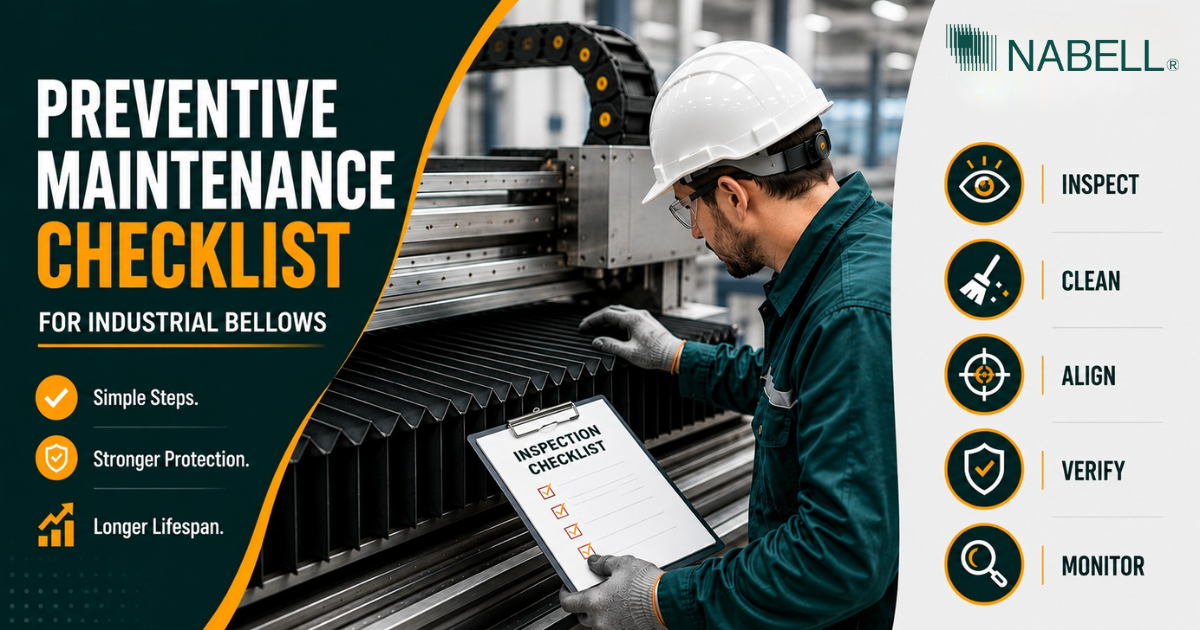
Preventive maintenance for industrial bellows is crucial for maintaining equipment efficiency and longevity. Neglecting regular checks can lead to contamination, reduced performance, and costly repairs. Bellows serve as vital machine protective covers, designed to safeguard machinery and components from dust, debris, and environmental conditions. However, without regular industrial bellows inspection, these protective covers may damage, compromising the entire system.
This post covers essential topics, including early signs of bellows wear, the importance of preventive maintenance for industrial bellows, daily and weekly inspection checklists, cleaning methods based on material types, and installation checks that prevent premature failure. All these practices play a significant role in preserving the performance and reliability of industrial systems and help extend bellows lifespan.
Signs of Early Bellows Wear to Watch For
Recognizing signs of wear early can help prevent costly repairs or downtime. Identifying these issues will keep your equipment in peak working condition and help prevent bellows failure. Here are five common signs of early bellows wear.
- Micro-cracks at fold points: Small cracks at the fold points of the bellows indicate material fatigue, which can worsen over time, leading to leaks or complete failure.
- Surface thinning: As bellows material becomes thinner due to friction or pressure, it weakens the overall structure, increasing the risk of tears and compromising its protective function.
- Hardening or brittleness (material fatigue): Bellows materials can harden and become brittle from prolonged use, making them more vulnerable to cracking or breaking under stress.
- Uneven extension patterns: If the bellows don’t extend evenly or retract smoothly, it’s a sign that the internal mechanism may be out of alignment, leading to potential failures.
- Visible wear or abrasions: Look for worn-out areas on the bellows surface. Scratches or cuts from debris can compromise the bellows’ sealing function and affect the equipment’s overall protection.
Why Preventive Maintenance for Industrial Bellows is Critical?
Preventive maintenance ensures that industrial bellows function properly and extend their operational life. Regular care helps avoid unexpected equipment downtime and costly repairs. Here are the top reasons why maintenance is critical.
- Protecting precision components: Bellows are often used in precision machines, where even small issues can lead to significant failures. Regular checks through industrial bellows inspection keep these components safe and avoid damage.
- Avoiding premature wear: Consistent maintenance prevents wear caused by environmental factors, pressure, or friction. Early intervention ensures the bellows function efficiently for longer periods, helping extend bellows lifespan.
- Ensuring consistent machine performance: Regular maintenance ensures that the bellows perform consistently, keeping machinery running smoothly and maintaining production efficiency.
- Maintaining safe operations: Faulty or degraded bellows can lead to accidents or malfunctions. Preventive maintenance reduces these risks by addressing issues before they turn critical.
- Minimizing downtime and repair costs: Regular maintenance helps identify issues early, reducing unexpected downtime and preventing expensive repairs, saving both time and money in the long run.
Daily Industrial Bellows Inspection Checklist
A daily inspection routine helps identify problems before they escalate into serious issues. Here’s a checklist for routine inspections.
- Visual inspection for tears, punctures, abrasions: Check the bellows surface for any visible damage, including cuts, punctures, or tears that could affect their functionality.
- Check for unusual folding or deformation: Ensure the bellows are properly folded without any irregularities that could indicate internal damage or misalignment.
- Ensure proper alignment during machine travel: Watch for any misalignment in the bellows while the machine operates. Proper alignment ensures the bellows perform their protective function effectively.
- Look for trapped debris or coolant buildup: Check for debris or coolant buildup inside the bellows. These can cause blockage, wear, or contamination, affecting performance and lifespan.
- Ensure smooth operation of the bellows during movement: Ensure that the bellows extend and retract smoothly without any obstruction or resistance. Any unusual friction should be investigated immediately.
Weekly/Routine Maintenance Checks for Industrial Bellows
Routine checks are essential for keeping your bellows in optimal condition and ensuring smooth machine operations. Here’s a checklist to help with your routine maintenance.
- Clean debris accumulation: Regularly remove any debris or dirt from the bellows surface to ensure they are functioning without obstruction. This prevents damage and maintains the protection they provide.
- Inspect mounting brackets and fasteners: Check that the brackets and fasteners holding the bellows are secure. Loose or worn parts can affect the performance of the bellows and lead to failures.
- Check for excessive compression or overextension: Ensure the bellows are not subjected to too much compression or overextension, which can lead to wear and cause them to fail prematurely.
- Monitor unusual friction or resistance during movement: If the bellows exhibit resistance while extending or retracting, investigate the cause. Unusual friction can lead to damage or inefficient operation.
- Verify that seals are intact: Check the seals at both ends of the bellows to ensure they’re intact and properly positioned. Damaged seals can allow contaminants to affect machinery performance.
Proper Cleaning Methods for Different Bellows Materials
Cleaning your industrial bellows properly is essential to maintain their performance. Here’s a guide to cleaning bellows based on their material.
- Fabric bellows: Use mild soap and water to clean fabric bellows. Avoid abrasive scrubbing as it can damage the material. Let them air dry to prevent mold growth.
- Coated bellows: Coated bellows require more gentle cleaning. Use a soft cloth with mild detergent, avoiding solvents that can damage the coating. Dry them thoroughly after cleaning.
- Metal bellows: For metal bellows, use non-abrasive tools to clean the surface, such as a soft cloth or a plastic brush. Mild soap and water are typically enough to remove contaminants.
- What NOT to Use (Harsh Chemicals, High-Pressure Water, etc.): Avoid using harsh chemicals, abrasive brushes, or high-pressure water as these can damage the bellows’ surface or coatings, leading to premature wear.
- Cleaning Frequency Recommendations: Fabric and coated bellows should be cleaned regularly depending on their operating environment. Refer to the manufacturer’s recommendations and guidelines on the same. Metal bellows, however, may require less frequent cleaning unless exposed to extreme conditions.
Installation and Alignment Checks That Prevent Premature Failure
Proper installation and alignment are key to ensuring your bellows last longer and perform effectively. Regular checks during installation can prevent future issues. Here’s what to watch for.
- Correct stroke length matching: Ensure the bellows stroke length matches the machine’s required movement range. Incorrect stroke length can lead to overextension or compression.
- Avoiding over-compression: Check that the bellows aren’t compressed beyond their recommended limits as this can lead to material fatigue and premature failure.
- Proper anchoring: Make sure the bellows are securely anchored at both ends. Loose anchors can cause misalignment, leading to wear and potential failure.
- Ensuring even extension during travel: The bellows should extend and retract evenly without distortion. Uneven extension may indicate internal damage or improper alignment.
- Proper sealing during installation: Ensure that the bellows are properly sealed during installation to prevent contaminants from entering and damaging the equipment.
Contact Nabell USA for Premium Industrial Bellows
At Nabell USA, we offer durable, high-quality industrial bellows designed to provide lasting protection for your machinery. For more details or inquiries, visit our website, contact us at 704.986.2455, or email us at sales@nabell.com.